|
| Blog |
 |
| Archive |
|
|
|
|
| Blog |
| To find an archived article, simply click on Index and scroll the subject titles, or do a Ctrl-F search |
TALLRITE BLOG
You can write to me at blog2-at-tallrite-dot-com |
||||||||||||||||||||||||||||||||||||||||||||||||||||||||||||||||
| For some reason, this site displays better in Internet Explorer than in Mozilla Firefox | ||||||||||||||||||||||||||||||||||||||||||||||||||||||||||||||||
| March 2006 | ||||||||||||||||||||||||||||||||||||||||||||||||||||||||||||||||
|
||||||||||||||||||||||||||||||||||||||||||||||||||||||||||||||||
|
||||||||||||||||||||||||||||||||||||||||||||||||||||||||||||||||
ISSUE #121-26th March 2006 [291+176=467]
|
||||||||||||||||||||||||||||||||||||||||||||||||||||||||||||||||
|
Every year in Ireland, at the start of Lent (the
Christians' Ramadan) the charity Trócaire
(an Irish word which means Compassion) distributes cardboard collection
boxes to churches and other worthy establishments. The faithful are
exhorted to take them home and to put in them the money they are able to
save by giving up stuff - like booze, sugar-in-tea, chocolate, second
helpings, cigarettes - as part of their Its theme for this year's Lenten collection is child labour in South America. This is supported by a frequent TV ad which depicts a gruff, heartless Hispanic boss who dictates rigorous employment terms (12-hour days, two days off a month, low pay, no liability for accidents etc) for work in the fields - to an eight-year-old little girl. A similar radio ad features a nine-year-old boy called Jaime. A couple of TV programmes have shown life in a Nicaraguan village where Jaime's mother, deserted by her husband, struggles to raise her children, whose schooling takes second place to working in dreadful conditions in a coffee plantation. Now, who could not deplore the use of children to toil all day - or in many cases trafficked as slaves - when they should be going to school and frolicking with their friends? And who can doubt that their future prospects as undereducated adults are grim and likely to perpetuate a deprived life-cycle? But what is the solution? For this is not a simple issue. Employers hire children because they are available, are cheaper than adult employees, and are no doubt less troublesome. Children go to work because another adult (usually a parent) has sent them there, generally for the money that the family desperately needs to survive. How are you going to persuade either party to desist from the practice? So what is Trócaire planning to do with all the money it raises (apart from pay for the prolific advertising)? Its special Lenten website, so verbose in presenting the problem of child labour, is singularly tongue-tied when it comes to explaining how it will actually use the money to alleviate it. All it says is that
In its vague way, this seems to amount to providing a measure of education, which if so is an utter can of worms. Consider.
Child labour is not something that is solvable by throwing a bit of money at in a once-off gesture, as Trócaire seems to imply in what I regard as its fundamentally dishonest campaign. Throwing serious money is another matter. An ILO report in 2003, “Investing in Every Child” (PDF, 1.1 Mb), showed that an investment of $760 bn (yes, billion) on education and replacing child wages would ultimately yield a net benefit of $4.3 trillion in terms of greater productivity and health in adult life. But who is ever going to stump up the $760 bn? It's just not a realistic option. On the other hand, numerous studies (for example these papers from the US Department of State) have shown that it is poverty which breeds child labour (not the other way round as some have claimed), and that as families get richer they choose to spend money to educate their children rather than earn it by sending them out to work. England is a case in point. It was not simply the moral indignation stoked up by Charles Dickens that led to the outlawing of child labour a century ago, but the newly acquired wealth that resulted from the extraordinary industrial revolution. This is what made the elimination of child labour possible. And therein lies the lesson. To tackle child labour in the developing world, the countries there must grow their GDP - quickly and certainly faster than population. This entails
But rich countries must also do their part, which means
In a word, embracing capitalism. Paradoxically, these straightforward measures will make not only the developing world wealthier and thus lead to the end of child labour, but will enrich the West as well. But are there too many vested interests to allow it to happen? If there are, then there's no point bemoaning child labour as it won't stop. Meantime, I don't trust Trócaire in its Lenten campaign against child labour. Not that I believe it will put the money collected to improper use. The money will, however, do nothing substantive to tackle its stated objective. Moreover, I've noted in the past Trocaire's unprincipled political behaviour, as have others. So my Lenten no-beer money is going to its competitor charity, GOAL.
You know the scene. You've found the apartment of your dreams. You've put in your offer (a lot more than you hoped to pay or can reasonably afford), the seller has accepted it and you've paid a deposit to secure the deal. You're thrilled to bits. It's now over to the lawyers to draw up the formal contract. A week later you get a phone call. Someone has popped up out of nowhere and offered a higher price than yours. So if you still want it, you have to match the new price. Otherwise it goes to the other guy and you will get your deposit back. You've just been gazumped. And you're mad. And impotent. I know. I've been there. But there is a defence. You don't have to be gazumped. In most of the English-speaking world, your word is not your bond when it comes to buying property, nor is paying a deposit and getting a receipt. Either party can back out, however many witnesses you may have. As Sam Goldwyn once said, “a verbal contract isn't worth the paper it's written on”. The only thing that makes your contract water-tight is, well, signing the contract. Both of you - buyer and seller. The difficulty is that the contract is a formal document drawn up only by lawyers, usually in their own good time - usually in weeks not days, and the clock can start ticking only after you have a agreed a deal in principle. During this period, you are completely exposed. (In fairness, so is the seller, because you can cut your offer just as he can raise his asking price.) The trick is to manage this gap period. “Mind the Gap”, as they say on the trains. There are two approaches. Eliminate the Gap Ideally you should try to get rid of the gap altogether. I did this after the first time I was gazumped. Controlling my anger, I agreed the higher price demanded in a personal meeting with the seller (not his agent), on the one condition that we would not leave each other's presence until the contract was signed - which even included going to the Gents together. We phoned our two respective lawyers and insisted they drop everything and prepare the contract immediately, in our presence, with the promise of a bonus fee (which I paid for both). The drafting session dragged on from noon until 6 pm, with sandwiches being sent in, but at the end of it, the contracts were signed by both parties. It was a highly uncomfortable, highly stressful process but ultimately successful - in the sense I was gazumped only once instead of a second time. For the amount of money involved, not to mention the crazy property market since, the stress was worth it. Do It Yourself If you cannot marshal the lawyers on the spot (they're a curmudgeonly lot), there is another way to defend yourself against a gazumping. That is, to write and sign your own contract the moment that you have agreed a deal with the seller. Once again, this requires that you meet him face-to-face. Real estate agents hate this, they find it insulting and will try to prevent it because they feel you are making them superfluous and are worried you will plot to cheat them of their commission. But it is your money that they all want, so be hard-nosed and insist on meeting the seller, within the property itself. The agent can come along if he/she wants. Beforehand, draft an agreement that reflects what you want to see included in any deal. Ask your lawyer to help if you wish. Bring a laptop and printer with you. Negotiate the deal with the seller, most crucially the price of course, and the payment schedule (deposit, first payment, final payment). Being in the house will help clarify secondary issues on the spot such as what is included and what is not. Prepare the agreement jointly with the seller, including everything you have agreed. Specify that this agreement will be superseded by a final contract, to be prepared by lawyers, which will reflect the same terms. Print off two copies, one for each of you, and both sign both of them, on every page. Both of you initial any amendments, or else re-print and re-sign the amended page. Get a neighbour (or the fuming real estate agent) to witness the signatures. Hand over whatever payment you have agreed to be then due. Open the champagne. In due course, pass photocopies of the agreement to the lawyers and instruct them to prepare the final contract. Now the agreement you have just signed will not have the full force of the final contract. However it will still be a most powerful document which either party will be loathe to put to any legal test. The fact of its existence almost ensures the seller will not dare gazump you. For if he does, it is by no means certain that he will get away with it, as he would if all you had was a Munich-style little receipt for a deposit. At the very least a court of law would look sympathetically on your case and demand explanations from the would-be gazumper. This second approach works. I've done it. And far from the seller being in some way resentful and suspicious, he is invariably delighted because it gives him certainty too. He can smell your money and the aroma is overpowering! __________________ For many years, I held a senior contracting position in a multinational company. And I can tell you that the principle underlying the above techniques, which I had developed to help me buy gazump-free houses for myself, works equally well in any business negotiation context. And that principle is that if you have reached any important agreement, don't leave the room, however long it takes, until it's written up, in whatever form is convenient, and signed by both parties there and then. Worry about eating, drinking and sleeping when it's all over. Until then, don't stop or rest. It can be written up nicely and more legalistically at a later date; that's just a formality. With this principle, you will save yourself no end of headache. And you'll never be gazumped.
Adding
to the Gaiety of the Human Condition In the last couple of weeks we've seen some enterprising public rages by national figures over here in Europe. ____________________ Ireland's minister of justice, Michael McDowell, was incensed when his own department's figures showed that last year the police force had increased by only two (yes, 2). Purple of spittle-flecked face, he likened the opposition's Richard Bruton, who had pointed this out, to Hitler's chief of propaganda, Joseph Goebbels. Mr McDowell is the same minister who a little earlier had associated the Green party with looters, anoraks, muesli and open-toed sandals. Sadly he issued a double apology for these transgressions. A fellow minister, John O'Donoghue, added to the exuberance by calling the Greens “bicycled tut-tutters and windmill blowers”. John Gormley, the respected chairman of the Green party gave as good as he got, telling Mr O'Donoghue, “you are a sewer rat.” ____________________ Meanwhile, over in Italy, prime minister Silvio Berlusconi cheered up TV viewers no end when he foolishly showed up for an interview on an RAI TV station. RAI is one of the few Italian networks that he does not own or control, and being under someone else's control is not an experience he is familiar with. An earnest young interviewer, Lucia Annunziata, with a bone to pick, not only asked him uncomfortable questions, but had the temerity to demand that he stop waffling and answer them. Being aggressive and undeferential to politicians is commonplace Britain (Jeremy Paxman famously so), but apparently most unusual in Italy. She questioned Mr Berlusconi about
The sensitive fellow could take no more of this impertinence. Calling his interviewer a left-winger who “should be ashamed of herself”, he stormed out of the studio in a rage. ____________________ Then there was the French moment, as we were entertained by more storming out, this time over in Brussels during the twice-yearly EU summit, under Austria's chairmanship. Last week, Frenchman Ernest-Antoine Seillière, who is president of the EU employers' federation, Unice, was delivering an address on economic reform to the heads of all 25 EU governments. Having begun en Français, he switched to English saying this was now the international business language. A Frenchman speaking English? To an audience which included the French president? Such insolence. It was all too much for the haughty Jacques Chirac. In a fit of nationalistic chutzpah and in best Berlusconi style, the president of France stood up and flounced towards the exit. Not only that but he dragged along his two lackeys - sorry, his two hapless ministers. It was ironic that the theme of Mr Seillière's talk was the need to resist economic nationalism in the EU's single market. Meanwhile, Mr Chirac skulked outside the grand meeting room until another Frenchman, Jean-Claude Trichet (president of the European Central Bank), restored Gallic honour by yakking in French. ____________________ It is incidents such as these that give you faith in mankind. If there were not people such as McDowell, Berlusconi and Chirac, whose juvenile tantrums from time to time
where would we be? May they long splutter in rage.
Those of a masochistic streak can watch me on RTÉ's Questions & Answers programme on Monday 27th March where I will be a plant in the audience. I am told the panel will include a Minister, a Green, a Human Rightster and Gardaí union leader and a Columnist. I was invited to come along because the producers were evidently desperate to find someone - anyone - prepared to defend the Bush invasion of Iraq and the Americans' continuing presence there. There aren't many such defenders here in Ireland, or if there are they're mostly silent. After transmission, the show will become available here. Late Note: I appear in
minute 7:30 of the ten-minute video
clip.
Week 121's Letters to the Press Only one letter this week (based on this issue's lead article above). It wasn't published, maybe because of fears that Lenten donations would be reduced rather than, as the letter suggests, diverted from one charity to another more sensible one.
- - - - - - - - - - I R A Q - - - - - - - - - - Quote: “I do not believe that a lasting peace is achieved by armed force, but I pay tribute to their courage and thank those who played a part in my rescue.” Peace
campaigner Norman Kember, kidnapped in Iraq for four months, ties himself
in knots with this ungracious thank-you for his release He
hates to admit that violence has had a beneficent outcome, Their
fourth colleague was brutally murdered - Though
at 75 he is old enough to know better, Quote: “We will leave Iraq, but when we do, it will be from a position of strength, not weakness.” President
George Bush Quote: “The rationale for a free and democratic Iraq is as compelling today as it was three years ago. A free and stable Iraq will not attack its neighbours, will not conspire with terrorists, will not pay rewards to the families of suicide bombers and will not seek to kill Americans.” Donald
Rumsfeld, US Secretary of State, - - - - - - - - - -A F G H A N I S T A N - - - - - - - - - - Quote: “We will invite [Abdul Rahman] again because the religion of Islam is one of tolerance. We will ask him if he has changed his mind. If so we will forgive him. But if he refuses to reconvert, then his mental state will be considered first before he is dealt with under Sharia law” Judge Ansarullah Mawlazezadah at the
trial in Kabul of Abdul Rahman Shariah law is integral to the new, post-Taliban Afghan constitution. Happily, it now looks
as if, due to international outrage, - - - - - - - - - - B E L A R U S - - - - - - - - - - Quote: “[We will] wring necks of those who threaten a coup.” Alexander
Lukashenko menaces objectors He
was pronounced winner of the presidential election Quote: “I'm so tired to be afraid every time” Dimitri,
a 19 year old student, demonstrating against - - - - - - - - - - N O R T H E R N I R E L A N D - - - - - - - - - - “They are no more proper Muslims than the Protestant bigot who murders a Catholic in Northern Ireland is a proper Christian but, unfortunately, he is still a Protestant bigot.” UK
prime minister Tony Blair enrages Unionists He was making a major foreign policy
speech about how “Mr Blair ... is not ... comparing like with like. I am not aware of any cases of senior Protestant church leaders or Government officials calling for sectarian attacks on Catholics. There are, however, cases of senior Muslim clerics calling for Jihad.” Ulster Unionist leader Sir Reg Empey responds
|
||||||||||||||||||||||||||||||||||||||||||||||||||||||||||||||||
| See the Archive and Blogroll at top left and right, for your convenience | ||||||||||||||||||||||||||||||||||||||||||||||||||||||||||||||||
ISSUE #120 - 19th March 2006 [240]
|
||||||||||||||||||||||||||||||||||||||||||||||||||||||||||||||||
|
Palestinian Hand-Biting Has Consequences Dear oh dear. You just know that the ordinary Palestinian population are riding a wild tiger looking for a fall. They are like someone who cannot, or will not, face a reality that is obvious to all around him. He blunders on and on until reality smacks him in the face, and then he falls back, his eyes smarting in pain and bewilderment. It happens more than once. Only after repeated such episodes do the scales begin to fall from his eyes, and the connection made between his actions and the consequences that ensue. Only then does he begin to adjust his behaviour so that it leads to benign outcomes rather than malign ones. For decades, the Palestinians have refused the offer of one Palestinian state after another, for the simple reason that they don't want the Jews to have one. The result is that the Jews do have one, and the Palestinians don't. Fixated that the choice they face is one of all or nothing, they have persistently opted for nothing. Which is precisely what they've got. Of course it's misleading to talk of “the Palestinians” in this way, because in truth until this year it has been the unelected, unmandated tyrannical leaders of the ordinary Palestinians who have been making all the key decisions that have resulted in the impoverishment and estrangement of the people.
Under Husseini's leadership, the Palestinians rejected a two-state solution in 1937 and again in 1947/8; two further rejections came under Arafat in 1967 and 2000. The Israelis accepted them all. (Actually, the proposals were for three-state solutions, two Arab and one Jewish, since Jordan - or Trans-Jordan as it was initially known - was created in 1946 as the first homeland for Palestinian Arabs.) Meanwhile, after Israel was created in 1948, the Palestinians partook in four wars (1948–49, 1967, 1973–74, 1982) and two intifadas (1987-94, 2000-2005) against the Israelis - and got the worst in all of them. The Palestinians have thus been within easy reach of peace and statehood for seven long decade despite being perennially on the losing side in every conflict since 1939s. Nevertheless it is true that the terms became less favourable with each passing offer, for such is the consequence of starting fights but never winning them, whilst being unwilling to cut your losses. With its dire leadership, the Palestinian entity has become such an economic basket case that today it can afford barely 40% of its annual $1.7 billion budget. For the rest it relies on massive gifts from foreign taxpayers. Here is the breakdown of the Palestinian Authority's budget -
Up to now, you could argue that the Palestinian people were merely victims of their vicious and incompetent leaders, rather than suffering from their own failure to recognise the reality of cause and consequence. But with recent events, that is changing. And how. Firstly, the Palestinian people in their first ever proper election, have by a solid margin (58% of parliamentary seats) voted in Hamas, whose Covenant openly demands, since 1988, the elimination of Israel:
Thus such words now for the first time represent the will of the people. So long as this remains so, it is unconscionable that other countries should support them or their aspirations. They have made themselves into pariahs. Secondly, last month, Palestinians did their share of rioting and looting in the wake of those Danish cartoons and Imam Ahmad Abu Laban's three fakes. Their fury was directed not just at Denmark/Scandinavia, but at Western targets in general and EU offices in particular. Thirdly, last week, despite denials, the British, Americans and Israelis clearly co-ordinated and engineered a military attack on Jericho Jail. British and American “monitors” or “guards”, or whatever they were, fled the jail just half an hour before the arrival of Israeli tanks, bulldozers and troops. The Israelis laid siege until Ahmed Saadat (head of the Popular Front for the Liberation of Palestine) and five other Palestinians, all suspected of assassinating an Israeli minister in 2001, meekly surrendered within a few hours. (Naturally, no suicide or glorious fighting death for these exalted, middle-aged gentlemen - that's just for youngsters from the lower orders.) The action was apparently in response to Hamas's stated intention of freeing the six, which stsrikes me as a reasonable enough justification. Palestinians were furious at the seizure, blamed the British (mainly) and then went on another anti-Western rampage, on a kidnapping spree and on strike. The eleven kidnappees were mostly French, Swiss and Korean aid workers and journalists, who happily were eventually released unharmed. EU monitors at the Rafeh crossing with Egypt were attacked and the British Council cultural centre in Gaza City burnt down, along with a number of cars. Now assemble the the pieces of this sorry tale. The world genuinely wants to see the Palestinians enjoy peace and prosperity. This includes not just the vast majority of Arabs and Muslims, but the Western countries and even (albeit for its own security reasons) Israel. If you doubt this,
What's in it for any of these organizations and the people behind them? The answer is But the behaviour of the Palestinians is utterly bizarre and at odds with not only their own best interests, but intrinsically immoral. It is foolish in the extreme to bite the hand that so lavishly feeds you, to attack those who are trying to help you with no thought of reward. But it is also morally wrong. Yet that is precisely what they are now doing. The result is predictable though evidently not predicted. Once Hamas with its annihilate-Israel covenant assumes power,
The Palestinians will be left to fester impotently in Gaza and whatever of the West Bank Israel opts to leave for them. How long this goes on for is anyone's guess. But it will only end when the Palestinian population as a whole - and its leaders - recognize that their dire plight is the consequence of no-one's behaviour but their own. When they realise that biting the hand that feeds you has consequences. When this realisation eventually strikes home, they will not believe the goodwill that is out there to help them. Even in Israel. And this time they are likely to appreciate it and use it to good effect. Let us hope it does not take too much longer and too much more self-inflicted pain for the scales to drop at last from their eyes.
Belligerent Adult Bullies Love Bluff, Hate Death Slobodan Milosovich had sworn he would never be taken alive. He would either die fighting like a warrior or else, as his two parents had done, take his own life. But it was just a bluff, for when it came down to it, on 31st March 2001, the Bully Butcher of Belgrade spiritlessly put up his hands and surrendered. Next he found himself in The Hague before the International War Crimes Tribunal. Saddam Hussein was another bully who had compared himself with Saladdin and declared he would never be taken alive. But he was. Dragged by the Americans from a disgusting hole in the ground. He could have used his pistol to send a couple of the GIs into the afterlife, with the certainty of his own violent death to follow. But no, he was no more courageous than Slobo. (Or many of the rest of us - but we don't brag about our bravery.) At least Saddam's own two sons went out fighting. But they had probably lived such cocooned lives that it never occurred to them that shooting at other people, which they'd often done, might entail their own deaths. Then there was Ahmad Saadat in Jericho Jail last week. More talk about never being taken alive; about choosing a hero's exit. But it took just six hours, and a clear ultimatum from the Israelis, “surrender or you will be killed”. So he surrendered, preferring to spend the rest of his life (he is only 50) behind Israeli bars, rather than a quick and glorious martyr's end. As I've noted before (eg in “Child Shahids” last week), death and and martyrdom are reserved solely for the young from the lower classes. The job of their boastful, bullying elders and betters is to persuade them down this depraved course. Definitely not to lead by example. Craven hypocrites. On another related issue, it is distasteful to see posthumous honour poured on Slobodan in the form of a public funeral attended by over 50,000 mourners as we witnessed at the weekend. Moreover, his grave will no doubt become a shrine for evermore, like those of the executed Japanese war criminals buried in Yasukuni near Tokyo, which prime minister Junichiro Koizumi controversially visits every year. Something similar will also more than likely happen after Saddam has been executed. I don't believe or support the death penalty under any circumstances; it is morally wrong to take a life unless absolutely necessary, which is not the case once a criminal is securely behind bars for life. But I would certainly support a post-death penalty tagged on to the end of life imprisonment. Specifically, I believe that such monsters should be cremated by their jailers and their ashes scattered to the wind. The chance of post-mortem veneration - and thus emulation - would be very much reduced, with no coffin at the funeral and nothing to inter. The early Soviets knew this when, having executed the entire Romanov royal family, they burnt their bodies and buried the remains in a mine.
A Particularly Malodorous Peerage A row has long simmered in the UK over the strong correlation between citizens who make generous donations to the governing Labour Party, and knighthoods and peerages received by the donors. Under the parliamentary rules, political parties have to declare donations and identify the donors, which makes the corresponding award of honours a bit obvious and embarrassing. “Cash for honours” is an unwelcome headline. The row has recently flared up again after revelations in the Sunday Times that to get round this inconvenient transparency, honours are now being dished out to people who have merely made loans to the Labour Party: loans do not have to be declared, y'see. The going rate for a peerage seems to be a loan in the order of a million pounds. (I don't know if it ever has to be repaid). Personally, I don't see anything particularly wrong in principle in selling such honours provided it is done upfront and openly. Better still would be an auction. The subterfuge and hypocrisy are what is objectionable. It's true that, insofar as the House of Lords is part of the legislature, people bidding for peerages would also be buying their way in to help make laws. However, is that so different from being born into a peerage or becoming a peer just because the leader of a political party likes you (or wants to banish you from the more powerful lower house)? Unless and to the extent that the House of Lords becomes fully elected, all methods of populating it are unsatisfactory, even if the result is nevertheless a chamber which is effective. Late the other
evening, 16th March, I nearly choked on my post-prandial Armagnac (well, cocoa)
when tuning in to the BBC's Question
Time programme. Sitting there, bold as brass, Indeed it was none other than she. Charles Kennedy, then leader of the Liberal Democrats, honourably sacked her from her shadow cabinet position forthwith. But he was evidently so embarrassed to have her around, that last May he dishonourably elevated this odious creature to the Lords, where she is entitled to remain, swathed in ermine, until death. This malodorous elevation is far more outrageous than someone openly purchasing his/her peerage or knighthood.
Mixtures of sugar and TNT are placed in a field and the bees are released to go and seek it out, over a radius of about a hundred metres. Gradually, the percentage of sugar is reduced and the bees become familiar with the smell of TNT. Eventually, they seek out pure TNT, convinced it is a flower. Then fifty or so of the high performers are fitted with minute radio transmitters, half the size of a grain of rice, and are ready to be released into enemy territory. Amid a swarm of maybe 50,000, they rush out, scatter and scour the territory looking for TNT. Electronic devices keep track of the bees' movements, and detectors back at the hive are able to determine whether the bees have returned with traces of TNT on their bodies. Apparently this technique is still in the early stages of development, but seems to show great promise. Other animals inspiring special research include
Where did God get all these bright ideas in the first place anyway?
Week 120's Letters to the Press Only one letter this week. It wasn't published, maybe because of fears of libel ...
Here's another one, also unpublished, from the beginning of the year.
Quote: “It shouldn't come as any surprise to anybody that the Iranians would love to talk further. They've loved talking for the last four years and they will talk as long as they can as they master the technical difficulties they have encountered in the uranium enrichment process. Of course [the Iranians want to talk], to throw more sand in our eyes” John
Bolton, the belligerent US ambassador to the United Nations, responding to
Russian foreign minister Sergei Lavrov's desire, --------------------- “Milosevic and his family are a disgrace. They ruined our lives and now we are expected to welcome them back. If this government lets Mira and Marko [his wife and son] go free, then they are worse than everyone thinks ... People were scared of Marko and that old cow Mira ... He was aggressive and arrogant - really like a gangster.” Belgrade businessman Dragan Djordjevic “Milosevic was the greatest Serb leader of the 20th century. If he was buried here, it would be a great honour. Whatever happens, his name will always be associated with Pozarevac.” Pensioner Pavle Djalovic from Pozarevac, --------------------- Quote: “Kill homosexuals in the worst, most severe way”. Grand Ayatullah Sistani,
Iraq's most revered Shi'ite, Perhaps not quite the nice guy we all thought
|
||||||||||||||||||||||||||||||||||||||||||||||||||||||||||||||||
| See the Archive and Blogroll at top left and right, for your convenience | ||||||||||||||||||||||||||||||||||||||||||||||||||||||||||||||||
ISSUE #119 - 12th March 2006 [270]
|
||||||||||||||||||||||||||||||||||||||||||||||||||||||||||||||||
|
Elephant in the
Feminists' Room Last Wednesday, 8th March, was International Women's Day, which has been running since, extraordinarily, 1909. Every year, it marks women's very laudable struggle for equality with men, justice, peace and development, whilst highlighting women's progress in these areas. And what progress there has been since 1909, in the Western world at any rate and, I must confess, most of the Communist world as well (let's not count North Korea). Women have the vote, go out to work, enjoy equal rights over the home, have special protections against male violence. Institutionalised discrimination against women is banned to such an extent that it sometimes works in reverse, like that story a couple of years ago that for equality reasons women should be provided with twice as many toilets as men because they spend double the time in them. It's true that, on average, a woman earns 15-20% less than a man, but that is mainly due not to sexism but to her lifestyle choices - from the less lucrative subjects she studies at college to splitting her energies between work and motherhood and home-making. Of course there is always scope to do more to boost the lot of women, and a recent focus is to get more of them into senior management positions and into parliament. Yet fighting for women's equality in the West is not any longer a serious issue, despite the rhetoric you often hear. In many parts of the non-West, however, it's a different story. Former Irish president, previous UN human rights supremo and famed feminist Mary Robinson wrote on International Women's Day ...
Belying her ignorance of the base male instinct to pursue women, the root causes, she tells us, “lie in the imbalance in power relations and gender inequality.” Blah, blah, blah, and that's it. End of article. Apart from the root cause nonsense, I don't doubt any of this, and agree that the litany of abuse against women and girls is pernicious, inexcusable and should be stopped. But there's a common thread to her examples. In pretty much all the cases quoted, the perpetrators know they are doing wrong. That's why they do it behind closed doors, deny that they're doing it, take advantage of the chaos of war, invent excuses (like “kitchen fires”). And that's why it is possible to contemplate a world in which, amongst such males, human conscience eventually prevails and such abuses cease. After all, go back a few centuries - nay, to the Second World War or the War of the Yugoslav Succession - and many Europeans were just as bad. But over time they (or at least most of them) have learned to behave better towards women. If they can, others can too. So, then ...
It is of course Islam, or more precisely Islamism, the ideology that dare not speak its name in the company of polite “liberal” society in the West. Perusing through my English translation of the Koran, I see that Shura 2 tells adherents ...
In Shura 4, it's ...
Shuras 11, 15, 24 and 64 tell the devout that ...
With this kind of stuff for your guidance, is it any wonder that the Wahhabis of Saudi Arabia or the Shi'ites of Iran or the Taliban or the Janjaweed-sponsoring rulers of Sudan demand ...
It is not that every Muslim is bent on oppressing women in this way; thankfully the majority are not. It is that those who wish to are provided with excellent religious cover, indeed encouragement, in the Koran. If feminists like Mary Robinson were serious about using occasions such as International Women's Day to advance the cause of the world's women, they should have the courage to place the injustices of Islamism at the very top of their list. And there they should stay until the day when Muslims publicly recognize that, notwithstanding what the Koran says, women are equal in value to men and are entitled to the same rights, respect and humanity. Instead, the feminists shy away from the real problem that women face in order to concentrate on lesser ones because they are easier - and less personally dangerous - to talk about. They neglect the irony that when Islamists hold sway, feminist issues are among the first casualties. The mullahs ruling in Teheran demonstrated this most recently when they sent in the police to attack a peaceful assembly of women's rights activists marking last week's International Women's Day. Fighting Islamism is therefore the single best thing that can be done to advance the cause of women, yet few feminists want to recognize this necessity. Thus, it sometimes seems that (anti-Islamist) men - of whom George Bush is but one - are doing more for the welfare of women than the feminists care to do. They want to ignore that elephant in their room. I've written previously about Islamic abuse of children, most recently the way Shi'ites encourage their youngsters to cut themselves in mourning for Mohammed's grandson, and even cut their own infants for the same purpose. I asked whether there could be a more overt and depraved form of abusing children. Well I suppose I was naive. In the Palestinian territories, to this day and since the outbreak of the second intifada in 2000, there is an active education campaign going on in schools, on TV, in the mosques and elsewhere designed to encourage children to adopt Shahida. This is of course the act of suicide-homicide by blowing yourself up, directed specifically at Jews in Israel. And the education is aimed not only at the children, but at their mothers who are urged to exhort their offspring to blow themselves up. (Naturally, those propounding shahada, whether mothers, imams or leaders, never propose to lead by personal example.) And the six-year campaign is having success. Palestinian polls apparently show that 72-80% of Palestinian children desire death as Shahids (martyrs). And some of them have achieved just that, for example 14-year-old Yussouf Zaakut or 17-year-old Ayyat Al Achris. There are several appalling videos that show the indoctrination in process - this one for example, entitled “Ask for Death”. I was especially shocked by this exchange in a panel discussion on official Palestinian TV.
I was wrong, absolutely wrong, in thinking those Shi'ites cutting into their sons' skulls is the most depraved form of abusing children. The greatest child abuse of the age is what the Palestinians are doing to their own children today. Right now. It will reap terrible consequences.
I made one of my rare trips to the cinema the other day and watched “The Constant Gardener”, which stars Ralph Fiennes and earned his co-star Rachel Weisz an Oscar. Weisz, exploding with anti-Capitalist conspiracy-laden ire and rhetoric marries Fiennes, a mild ineffectual diplomat who is posted to Africa and is constantly watering his office plants (hence, apparently, the title). In Kenya, the intrepid Weisz sets about investigating nefarious goings-on by a multinational drugs company bent on surreptitiously poisoning Africans with the collusion of white diplomats. When she's not doing this, she is being rude to white guests at embassy cocktail parties. Thankfully, she eventually gets murdered for her trouble, but her widower takes up the cudgel until he too is killed by thugs hired by those pharmaceutical diplomatic types. And that's the story. It is a beautifully made and constructed movie, with wonderful scenes of Kenya, Sudan, birds, markets and some lovely music. And there is a delicious dénouement at the end when the head villain gets it. But from start to finish it is nothing but a relentless piece of irritating left-wing propaganda. Here are just a few examples. The movie starts with diplomat Fiennes giving a lacklustre lecture on British foreign policy. He is interrupted by Weisz who launches a tirade against the Iraq war, the bypassing of the UN, the wickedness of sanctions and other standard tripe. Nothing remarkable in that, but it is notable that Fiennes is dumbfounded, speechless. He is a British diplomat on official duty who makes absolutely no attempt to defend British policy in Iraq. This is beyond the unbelievable. But from the filmmakers' viewpoint it is essential, since otherwise their movie would become a vehicle for an alternative viewpoint that might convince some viewers. And we can't have that. Once the scene moves to Africa, everything becomes strictly multi-cultural - blacks, browns and whites, with nobody even noticing anyone's colour or behaving differently towards those of a different colour. This is political correctness gone mad as it simply does not happen, in Africa or anywhere else. Nor is it a racist manifestation to notice that one person is different from another, in fact not to do so is to deny another his/her racial identity. (Interestingly, Coronation Street residents suffer from the same blindness.) Naturally, all of the knaves and varlets are white males. Africans, Indians and women are either victims or brave idealists. The exception is Fiennes but that doesn't count because in the second half of the movie he metamorphoses into a virtual woman. It's also true that murders are committed by penniless blacks, but that is strictly on the orders of rich whiteys who are too slovenly to attend to their own necessities. The corporate villain of the piece is a large pharmaceutical firm. It is devoted to making money and like any Hollywood-inspired multinational is quite happy to do so by killing hundreds of Africans in lethal drug tests. It has no saving grace whatsoever - such as developing drugs which save and prolong life. We're left to believe that this is typical of all such firms. I'd have to conclude that on the movie set there wasn't a single AIDS sufferer kept alive on retroviral medication, or anyone else who might've said, “Hey, wait a minute.” A Janjaweed-style gang raids and burns a village in Darfur, yet it is identified neither as Janjaweed nor Islamist, and indeed the raiders wear military style uniforms rather than Arab dress. As those cartoons have reminded us in recent weeks, “brave” art self-identifies as art which attacks big multinationals, democratic government and white man's corruption. It never dares touch on Islamism, third world tyrannies or courageous people (such as cartoonists) who stand up to them. Not long before the hero Fiennes is (to my immense satisfaction and relief) killed, he brings a 5-year-old orphan refugee aboard a UN evacuation plane in the middle of the neo-Janjaweed raid, but this is apparently against UN rules. The plane captain refuses to be persuaded (or bribed - as a white pilot would have been) to let her stay because this would be breaking the rules, and as noted above the UN is never to be bypassed. But Fiennes does not kick the little girl off the plane because that would be nasty. Instead, she - incredibly - just gets off herself, to wander off alone into the scrub. Wasn't that nice of her to save everyone's embarrassment. But it is typical of the slipperiness of the movie. But, if you want to see a handful of glorious shots of Africa and flocks of wild birds, to the accompaniment of some nice music, and you are prepared to endure or ignore two hours of the constant propaganda, then “The Constant Gardener" is the film for you.
Not long ago I made my first trip to Cape Town, a captivating part of the world. I did most of the touristy things, including taking the cable car to the top of Table Mountain. There is a very clear walking path, with many signs along the way which explain local features, flora and other points of interest. One of these was a brass plaque giving the names and locations of the 25 vessels that have been shipwrecked on the Cape of Good Hope between 1647 (the “Haerlem”) and 1978 (the “SAS Transvaal”). Then the “Lusitania” caught my eye - it apparently sank in 1911. But wasn't it also torpedoed by the Germans off Ireland in the summer of 1915, a notorious act which almost brought America into the First World War? This prompted a little research. The name itself is that given by the Romans in 27 BC to a province that today comprises Portugal and a bit of western Spain. Its capital was Augusta Emerita, which is now the Spanish town of Mérida. The inhabitants, known as Lusitani, were said to be strong warriors but their origins are uncertain. So the Portugese “Lusitania”, a 5,557 ton passenger liner, had every right to the name. At midnight on 18th April 1911 and in thick fog, she ran aground on treacherous rocks, known as Bellows Rock on the Cape of Good Hope, or the Cape of Storms as it is referred to locally. This disaster was one of the main reasons that the the present lighthouse was built where it stands today, warning all of the imminent approach of the African continent. By contrast, Britain's “Lusitania”, the 32,000 tons pride of the Cunard Line, was launched in 1906 and the following year won the coveted Blue Riband for speediest (23.99 knots) crossing of the Atlantic. She was both the fastest and largest passenger ship afloat. When war broke out in 1914, she was commandeered by the Admiralty to carry munitions from America as well as civilian passengers. The Germans, aware that not all British merchant ships were as non-militaristic as they pretended, regarded them as fair game. So on 7th May 1915, 22 km off the Irish coast, whilst the Lusitania was completing her hundredth voyage from New York, U-boat U-20 launched a single torpedo at the Lusitania, which judging from the massive explosion that followed, seems to have struck a munitions arsenal. The ship sank in 18 minutes with the loss of 1,201 people. __________________________ I've not heard of a “Lusitania” having been built since. And with a double whammy within the space of just four years, that's hardly surprising. Suspicious folk, these sailors.
This link will bring you to a site where you can build a map showing all the countries you've ever visited in the world, out of 227. Having been raised in the Far East and spent over 30 years of my working life traipsing around the jungles, deserts and seas of the world in search of oil and gas, I thought I had covered quite a bit. But as you see I haven't; only 56 countries so far, a humble odyssey. That means there are still 75% of the world's countries that I haven't visited.
But according to the Century Travelers Club, there are actually 315 countries waiting to be visited, so on that basis 82% remain unvisited by me. And I don't even merit a Bronze medal for 100 countries visited (Silver for 150, Gold for 200). Ah well, it's only a bit of fun. Hattip Gavin's Blog.
Irish Blog Awards 2006 (Late Addition/Edition) I'm in a sulk due to my unbroken record in not winning an award. The cause of my rancour are the following worthy winners on 11th March ...
And no, I'm not jealous. Not much, anyway.
Week 119's Letters to the Press Three letters since the last issue of the Tallrite Blog three weeks ago, all of them published - to my astonishment.
Quote: “I want to say to people like [Abu Hamza], ‘Why are you living in the West? Why don’t you go and live in Saudi Arabia?’. Being a Muslim in Britain is different from being a Muslim in other countries. I am all for peaceful demonstration. If you live in this country there are democratic ways to behave. If you don’t like it, then go and live in a Muslim country.” Saira
Khan, a British Muslim of Pakistan extraction She
is sick of Islamicists ____________________ Quote: “Are you a German war criminal? ... Actually you are just like a concentration camp guard.” (You can listen here) London's
twice-elected Mayor Ken Livingstone confronts As
a result of pressure from the Board of Deputies of British Jews, “Elected politicians should only be able to be removed by the voters or for breaking the law. Three members of a body that no one has ever elected should not be allowed to overturn the votes of millions of Londoners.” Mr
Livingstone's response
to his suspension. ____________________
Poster
displayed by The
parade was intended Quote : “The website ... www.indymedia.ie has in the past produced interesting footage. On this occasion, it produced footage from outside of the Progressive Democrats' party offices being ransacked by a group of Deputy Gormley's type of people ...people including me, would most closely associate the anoraked group ... There was muesli in the air and open-toed sandals on the street.” Irish
Minister
of Justice Michael McDowell, Quote: “Well, I have a difficulty using the word condemn with any IRA action over the last 30 years and I think I've explained my position on that, my party has explained their position on that.” Toiréasa Ferris, the glamorous, leggy
25-year-old Sinn Féin mayor of Kerry She is also the daughter of Sinn Féin Kerry North
member of the Dáil Martin Ferris, Quote : “I never condemn wrong-doing in any area.” Ireland's
Taoiseach Bertie Ahern,
|
||||||||||||||||||||||||||||||||||||||||||||||||||||||||||||||||
| See the Archive and Blogroll at top left and right, for your convenience | ||||||||||||||||||||||||||||||||||||||||||||||||||||||||||||||||
| Return to Tallrite Blog |


 Lenten
penance. It's a very laudable way to collect and donate for charitable
causes. Trócaire successfully raises large sums every Lent, which
this year runs from 1st March to Easter Sunday 16th April 2006.
Lenten
penance. It's a very laudable way to collect and donate for charitable
causes. Trócaire successfully raises large sums every Lent, which
this year runs from 1st March to Easter Sunday 16th April 2006. 
 From
1921 to around 1950,
From
1921 to around 1950, 
 I
was astonished to hear on the
I
was astonished to hear on the 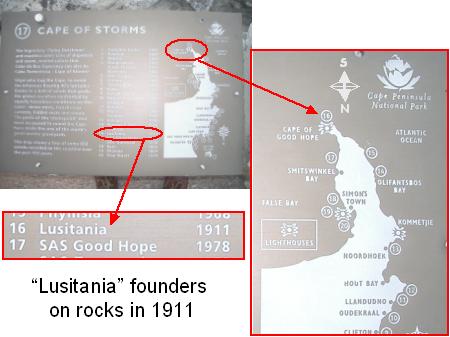

Now, for a little [Light Relief]
|
|
||||||||||||||||||||||||||||||||||||||||||||||
|
Gift Idea |
||||||||||||||||||||||||||||||||||||||||||||||

Good to report that as at
FREED AT LAST, |
||||||||||||||||||||||||||||||||||||||||||||||
|
|
||||||||||||||||||||||||||||||||||||||||||||||
|
|
||||||||||||||||||||||||||||||||||||||||||||||
|
BLOGROLL
Atlantic Blog (defunct) Blog-Irish (defunct)
Jihad
Religion
Iona Institute
Leisure
Blog Directory
My Columns in the
|
||||||||||||||||||||||||||||||||||||||||||||||
|
What I've recently
But it's not
entirely honest in its subtle pro-Palestinian bias, and therefore needs
to be read in conjunction with an antidote, such as See detailed review +++++
BP's ambitious CEO John Browne expanded it through adventurous acquisitions, aggressive offshore exploration, and relentless cost-reduction that trumped everything else, even safety and long-term technical sustainability. Thus mistakes accumulated, leading to terrifying and deadly accidents in refineries, pipelines and offshore operations, and business disaster in Russia. The Macondo blowout was but an inevitable outcome of a BP culture that had become poisonous and incompetent. However the book is gravely compromised by a litany of over 40 technical and stupid errors that display the author's ignorance and carelessness. It would be better to wait for the second (properly edited) edition before buying. As for BP, only a wholesale rebuilding of a new, professional, ethical culture will prevent further such tragedies and the eventual destruction of a once mighty corporation with a long and generally honourable history. Note: I wrote
my own reports on Macondo +++++
A horrific account of:
More details on my blog here. +++++
After recounting a childhood of convention and simple pleasures in working-class Aberdeen, Mr Urquhart is conscripted within days of Chamberlain declaring war on Germany in 1939. From then until the Japanese are deservedly nuked into surrendering six years later, Mr Urquhart’s tale is one of first discomfort but then following the fall of Singapore of ever-increasing, unmitigated horror. After a wretched journey Eastward, he finds himself part of Singapore’s big but useless garrison. Taken prisoner when Singapore falls in 1941, he is, successively,
Chronically ill, distraught and traumatised on return to Aberdeen yet disdained by the British Army, he slowly reconstructs a life. Only in his late 80s is he able finally to recount his dreadful experiences in this unputdownable book. There are very few first-person eye-witness accounts of the the horrors of Japanese brutality during WW2. As such this book is an invaluable historical document. +++++
This is a rattling good tale of the web of corruption within which the American president and his cronies operate. It's written by blogger Michele Malkin who, because she's both a woman and half-Asian, is curiously immune to the charges of racism and sexism this book would provoke if written by a typical Republican WASP. With 75 page of notes to back up - in best blogger tradition - every shocking and in most cases money-grubbing allegation, she excoriates one Obama crony after another, starting with the incumbent himself and his equally tricky wife. Joe Biden, Rahm Emmanuel, Valerie Jarett, Tim Geithner, Lawrence Summers, Steven Rattner, both Clintons, Chris Dodd: they all star as crooks in this venomous but credible book. ACORN, Mr Obama's favourite community organising outfit, is also exposed for the crooked vote-rigging machine it is. +++++
It is really just a collation of amusing little tales about surprising human (and occasionally animal) behaviour and situations. For example:
The book has no real message other than don't be surprised how humans sometimes behave and try to look for simple rather than complex solutions. And with a final anecdote (monkeys, cash and sex), the book suddenly just stops dead in its tracks. Weird. ++++++
It's chapters are organised around provocative questions such as
It's central thesis is that economic development continues to be impeded in different countries for different historical reasons, even when the original rationale for those impediments no longer obtains. For instance:
The author writes in a very chatty, light-hearted matter which makes the book easy to digest. However it would benefit from a few charts to illustrate some of the many quantitative points put forward, as well as sub-chaptering every few pages to provide natural break-points for the reader. +++++
The author was a member of Britain's V Force, a forerunner of the SAS. Its remit was to harass Japanese lines of command, patrol their occupied territory, carryout sabotage and provide intelligence, with the overall objective of keeping the enemy out of India. Irwin is admirably yet brutally frank, in his descriptions of deathly battles with the Japs, his execution of a prisoner, dodging falling bags of rice dropped by the RAF, or collapsing in floods of tears through accumulated stress, fear and loneliness. He also provides some fascinating insights into the mentality of Japanese soldiery and why it failed against the flexibility and devolved authority of the British. The book amounts to a very human and exhilarating tale. Oh, and Irwin describes the death in 1943 of his colleague my uncle, Major PF Brennan. +++++ Other books here |
||||||||||||||||||||||||||||||||||||||||||||||
|
|
||||||||||||||||||||||||||||||||||||||||||||||
|
After
48
crackling, compelling, captivating games, the new World Champions are,
deservedly,
England get the Silver,
No-one can argue with
Over the competition, |
||||||||||||||||||||||||||||||||||||||||||||||
|
|
||||||||||||||||||||||||||||||||||||||||||||||
|
|